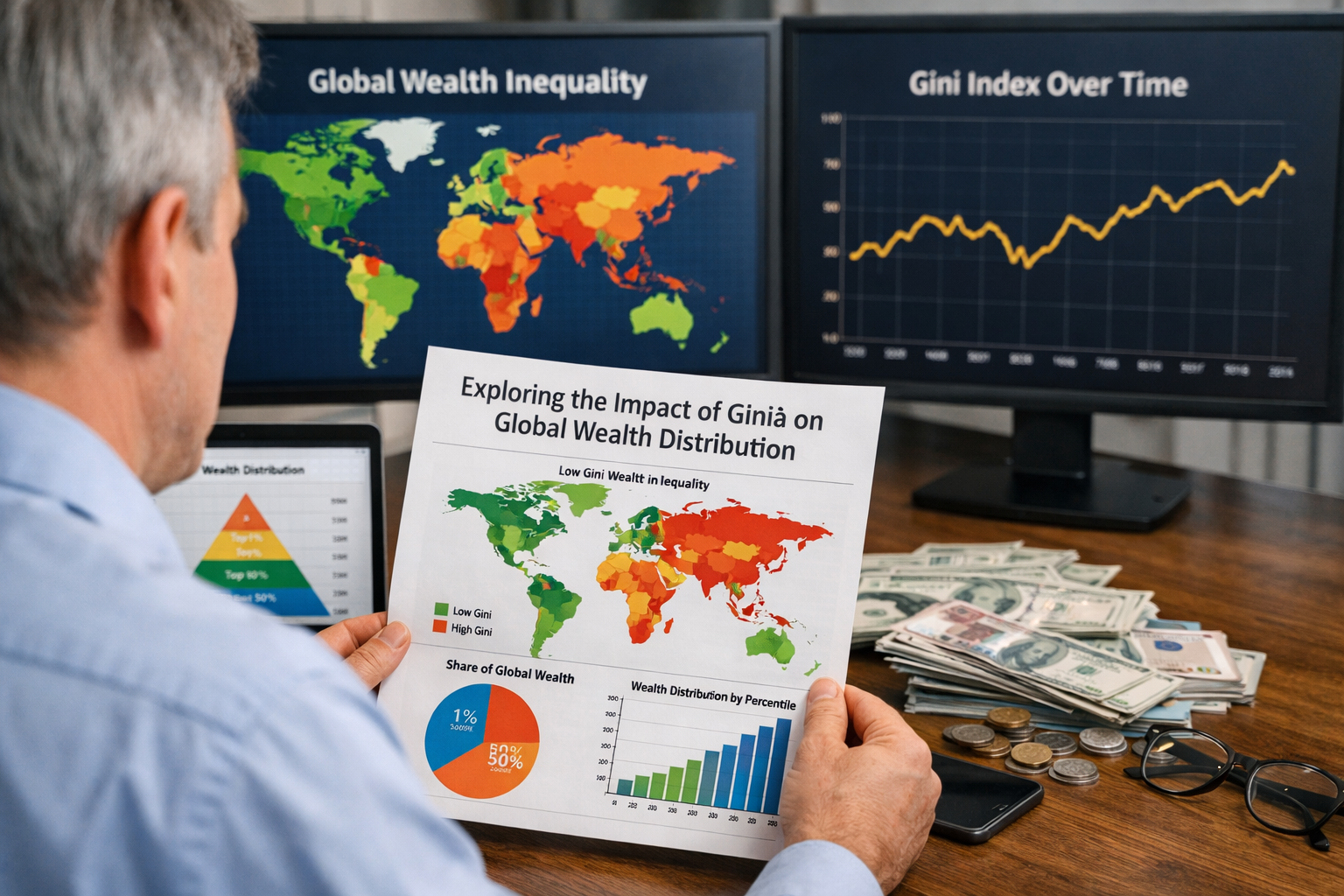
Exploring the Impact of Giniä on Global Wealth Distribution
Introduction
We live in a world where wealth is not distributed equally. The gap between the rich and poor continues to widen, raising questions about fairness and opportunity. Enter Giniä a powerful tool that helps us understand this complex issue of global wealth distribution. As we dive deeper into its implications, we’ll uncover how Giniä shapes economies, influences policies, and impacts lives worldwide. Get ready to explore an essential concept that can illuminate the path toward social justice and equity across nations.
Historical Background and Evolution of Giniä
Giniä, named after the Italian statistician Corrado Gini, emerged in the early 20th century as a tool to measure income inequality. Introduced in 1912, it provided a numerical representation of wealth distribution within populations.
Over time, its application expanded beyond economics to encompass social sciences and public policy. Researchers recognized that understanding inequality could inform better governance.
As global economic landscapes evolved, so did the relevance of Giniä. It became crucial for analyzing emerging economies and their wealth disparities while continuing to influence debates on equity and resource allocation across nations.
Understanding Giniä: Measurement and Policy Impacts
Giniä serves as a critical tool for measuring income inequality within populations. This metric ranges from 0 to 1, where 0 indicates perfect equality and 1 signifies extreme disparity. Understanding this scale helps policymakers visualize the economic landscape.
When governments analyze Giniä coefficients, they can identify trends in wealth distribution. A rising Giniä may signal worsening inequality, prompting urgent policy responses. This could include adjustments in taxation or social welfare programs aimed at redistributing resources.
Moreover, Giniä impacts international relations by influencing trade agreements and aid allocation. Countries with high levels of inequality often face challenges that extend beyond their borders, shaping global policies and collaborations.
Impact of Giniä Across Various Sectors
The impact of giniä is evident across multiple sectors, influencing economic growth and social stability. In education, high giniä levels can restrict access to quality resources, widening the knowledge gap between rich and poor.
Healthcare also suffers under significant wealth disparities. Those at the lower end of the income spectrum often face barriers to essential services, resulting in poorer health outcomes.
Additionally, giniä affects labor markets. Inequality can lead to decreased consumer spending power, ultimately hindering job creation and innovation within industries reliant on robust demand.
Future Trends and Implications of Giniä
As we look to the future, the implications of giniä hold significant importance. The ongoing evolution in wealth distribution indicates that disparities may widen if current trends persist. Increased automation and technological advancements could exacerbate these gaps.
Moreover, as nations grapple with climate change, economic policies will increasingly factor in social equity considerations tied to giniä. Countries may prioritize inclusive growth strategies.
The rise of digital currencies also poses questions regarding wealth accumulation and distribution dynamics. This innovation might shift how we perceive financial inequality on a global scale, reshaping our understanding of giniä’s impact in society.
Criticisms and Controversies Surrounding Giniä
Critics of Giniä argue that it oversimplifies complex economic realities. By reducing income distribution to a single coefficient, important factors like wealth concentration and regional disparities can be overlooked. This simplification may mislead policymakers.
Moreover, some researchers suggest that the Gini index fails to account for changes in living standards. A country might show low inequality but still possess high poverty rates affecting quality of life.
There are also concerns about its applicability across different cultural contexts. What constitutes fairness or equity varies significantly worldwide, challenging the universal relevance of Giniä as a measure for all nations.
Giniä’s Role in Social Inequality Globally
Giniä serves as a crucial indicator of social inequality across the globe. It highlights disparities in wealth distribution within and between countries, offering insights into economic stability.
When Giniä values are high, it often signals that wealth is concentrated in the hands of a few. This concentration can lead to increased social tensions and unrest, making it essential for policymakers to address these issues.
Understanding Giniä helps us recognize patterns of poverty and privilege. By analyzing this data, societies can work towards more equitable systems that promote fairness and opportunity for all individuals.
Real-world Applications and Significance of Giniä
Giniä serves as a vital tool for policymakers and economists. By quantifying income inequality, it helps track progress toward economic equity across nations. Governments utilize Giniä data to assess the effectiveness of social programs.
In business, companies analyze Giniä to understand market potential and consumer behavior. A high Gini coefficient may indicate underserved markets ripe for investment. Social enterprises often reference it in their mission statements to highlight commitment to reducing inequality.
Nonprofits leverage Giniä metrics for advocacy work, pushing for reforms aimed at wealth redistribution. These applications underscore its significance in driving meaningful change within societies worldwide.
Case Studies: Examining Giniä in Different Contexts
Examining giniä through various case studies reveals its complex implications. For instance, in Scandinavian countries, low giniä scores correlate with strong social policies and robust welfare systems. These nations showcase how equitable wealth distribution can lead to higher overall happiness.
In contrast, examining giniä in developing economies like Brazil presents a different story. The significant wealth gap highlights systemic inequalities that challenge economic growth and social cohesion.
Additionally, the United States illustrates another facet of giniä’s impact. Rising inequality has sparked debates about the effectiveness of fiscal policies aimed at addressing wealth disparities within a capitalist framework.
Addressing Giniä for Social Justice and Equity
Addressing giniä is crucial for fostering social justice and equity. By understanding its implications, societies can implement targeted policies that reduce economic disparities. This effort requires collaboration between governments, organizations, and communities.
Educational initiatives play a vital role in addressing giniä. They empower individuals with the knowledge needed to advocate for fair resource distribution. When people understand their rights, they become more engaged in pushing for change.
Additionally, equitable taxation systems can help redistribute wealth effectively. By ensuring that the wealthy contribute fairly, resources can be allocated toward public services that benefit all citizens equally.
Conclusion: Importance of Giniä in Global Wealth Distribution
The significance of giniä in understanding global wealth distribution cannot be overstated. It serves as a critical tool for policymakers, economists, and social advocates alike. By shedding light on income inequality, giniä helps identify areas needing reform and intervention.
As we navigate an increasingly interconnected world, addressing disparities highlighted by giniä becomes paramount. The insights gained from analyzing this metric can guide actions towards achieving greater equity and social justice globally.
Recognizing the implications of giniä encourages societies to strive for balanced growth that benefits all citizens. Acknowledging its importance fosters discussions around sustainable solutions to tackle wealth inequality effectively.