 By Admin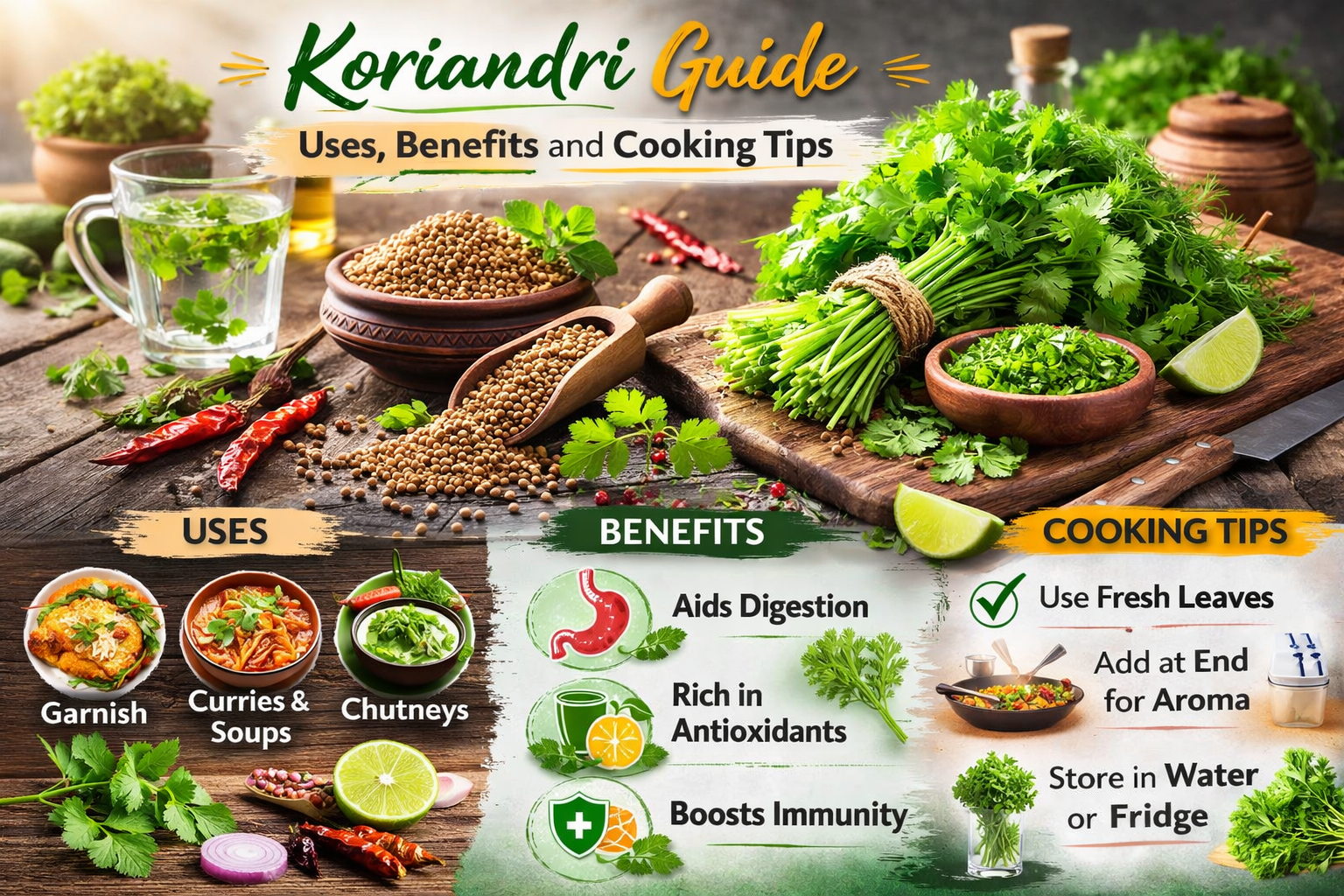
Koriandri, also known as coriander or cilantro, is a widely used herb from the plant Coriandrum sativum. Its fresh leaves and dried seeds are both used in cooking, offering two different flavors from the same plant.
The leaves taste fresh and slightly citrusy, while the seeds are warm and mild. Because of its taste, health value, and wide use in many cuisines, koriandri remains an important ingredient in daily cooking around the world.
What Is Koriandri?
Koriandri is a soft green herb that belongs to the parsley family. It grows quickly and produces leaves, flowers, and seeds that people use in different ways.
Different regions use different names:
- Coriander for the seeds or whole plant
- Cilantro for fresh leaves in some countries
- Dhania in South Asia
This simple plant stands out because it gives both a fresh herb and a dry spice.
Parts of Koriandri and Their Uses
Each part of the plant has its own purpose and flavor. This makes it very useful in cooking.
Fresh Leaves
Fresh leaves are soft and bright green.
They taste light, fresh, and slightly lemon-like.
People use them in:
- Salads
- Chutneys
- Garnishing cooked dishes
They are often added at the end of cooking to keep their fresh taste.
Seeds
Seeds are small, round, and dry.
They have a warm, slightly sweet flavor.
They are used:
- Whole in cooking
- Ground into powder
- In spice mixes like curry powder
Roasting the seeds can make their flavor stronger.
Roots
Roots have a stronger taste than leaves.
They are often used in Asian cooking, especially in sauces and pastes.
Nutritional Value of Koriandri
Koriandri is low in calories but rich in useful nutrients. It supports overall health in a simple way.
Key nutrients
| Nutrient | Benefit |
|---|---|
| Vitamin A | Helps eye health |
| Vitamin C | Supports immunity |
| Vitamin K | Helps blood clotting |
| Minerals | Support bones and body functions |
Fresh leaves give more vitamins, while seeds provide minerals and fiber.
Health Benefits of Koriandri
People have used koriandri for both food and natural health support for many years.
Supports digestion
It helps reduce gas and supports a healthy stomach.
Rich in antioxidants
It contains natural compounds that protect the body from damage.
Supports heart health
It may help manage cholesterol levels and support heart function.
Helps balance blood sugar
Some studies suggest it may help control blood sugar levels.
Reduces mild inflammation
Its natural properties may help calm minor swelling in the body.
These benefits come from the plant’s natural oils, vitamins, and plant compounds.
How Koriandri Is Used in Cooking
Koriandri is a daily ingredient in many homes across the world.
Common ways to use it
- Add fresh leaves to soups, rice, and salads
- Use leaves as a garnish
- Add seeds to curries and sauces
- Grind seeds into spice powders
It pairs well with vegetables, meat, lentils, and rice dishes. Its balanced flavor makes food more fresh and complete.
Taste Profile and Common Reactions
Most people describe koriandri as fresh and slightly citrusy.
However, some people feel it tastes like soap. This happens because of a natural genetic difference in how people sense certain flavors.
This reaction is normal and varies from person to person.
How to Store Koriandri Properly
Proper storage helps keep koriandri fresh and useful.
Fresh leaves
- Keep stems in a glass of water
- Store in the fridge
- Cover loosely
Seeds
- Store in a dry container
- Keep away from heat and moisture
Good storage helps keep flavor and nutrients for longer.
Growing Koriandri at Home
Koriandri is easy to grow and does not need much care.
Basic needs
- Sunlight for a few hours daily
- Well-drained soil
- Regular watering
You can grow it in small pots or a garden. Leaves are ready to harvest in a few weeks.
Safety and Side Effects
Koriandri is safe for most people when used in normal amounts.
However, keep in mind:
- Some people may have allergies
- Large amounts may cause mild stomach discomfort
- Rarely, it may cause skin irritation
If any unusual reaction occurs, it is better to stop using it and seek advice.
Cultural and Historical Importance
Koriandri has been used for thousands of years in different cultures.
- Used in ancient Egypt and early Europe
- Spread through trade to Asia and the Middle East
- Now a key part of Indian, Mexican, and Thai cuisines
Its long history shows its value in both food and tradition.
Conclusion
Koriandri may look like a simple herb, but it plays an important role in daily life. It brings together flavor, nutrition, and culture in a natural way.
Its ability to offer both fresh leaves and useful seeds makes it unique. Over time, it has become a trusted ingredient in kitchens around the world.
When you understand koriandri, you begin to see how simple ingredients can shape food, health, and tradition. It reminds us that even the smallest elements in cooking can carry lasting value.